How Can Laser Cutting Replace Traditional Die Cutting?

Time:2026-10-21 Author:Amelia
0%

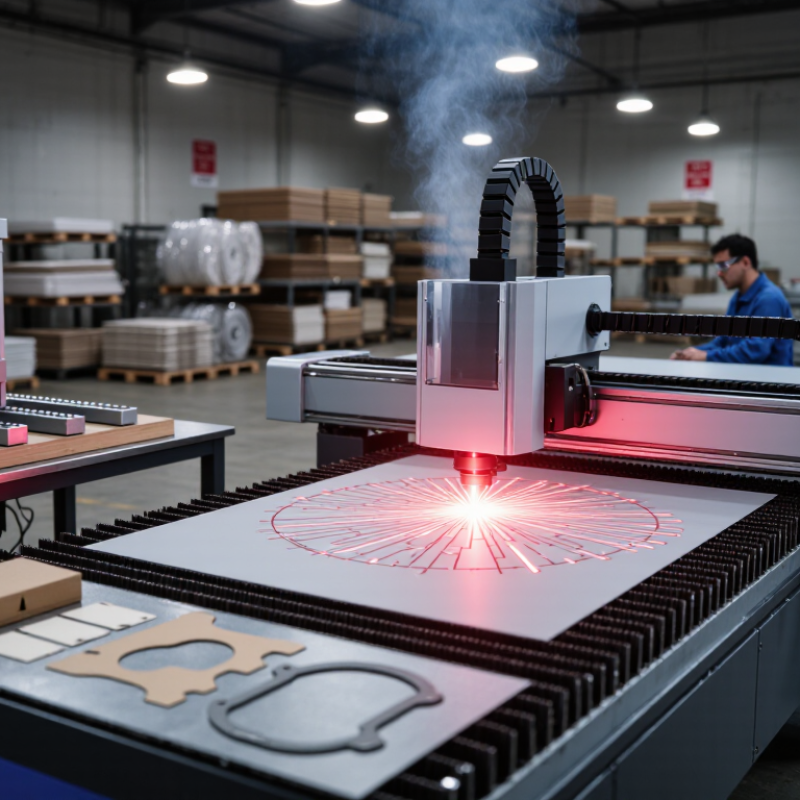
Can laser cutting replace traditional die cutting? In many applications, the answer is yes, but the decision depends on material, volume, and tolerance requirements. Laser cutting uses a focused beam to create digital profiles without a physical die. This can reduce tooling costs, shorten setup time, and support rapid design changes. A revised carton, gasket, or foam insert can move from CAD data to a finished sample within hours.

The difference becomes clear on the production floor. Operators can adjust cutting files instead of waiting for a new steel rule die. This flexibility helps manufacturers manage short runs, prototypes, and products with frequent design updates. Laser systems also produce clean, repeatable edges when power, speed, focus, and ventilation are properly controlled. Thin paperboard, films, fabrics, plastics, and some composite materials often respond well.

However, laser cutting is not automatically better. High-volume work may still favor die cutting because a proven die can process thousands of identical parts quickly. Heat-affected edges, smoke residue, reflective materials, and thick substrates may create quality concerns. The answer is nuanced. A responsible comparison should measure cycle time, energy use, edge quality, waste, maintenance, and operator skill. It should also consider material safety data and appropriate equipment safeguards.

For these reasons, the question “can laser cutting replace traditional die cutting” needs a practical, evidence-based answer. In some workflows, it replaces the die completely. In others, a hybrid process performs better. Careful testing reveals the truth.
How Can Laser Cutting Replace Traditional Die Cutting?

Traditional Die Cutting and Laser Cutting: Core Differences

How Can Laser Cutting Replace Traditional Die Cutting?

Traditional die cutting and laser cutting differ in how they shape materials. Die cutting uses a physical tool, pressure, and a fixed pattern. It works efficiently for repeated, high-volume production. Once the die is ready, each stroke can produce consistent parts quickly.

Laser cutting uses a focused beam to remove material along a digital path. It needs no custom die, so prototypes and design changes usually cost less. Operators can adjust files instead of ordering new tooling. The process also supports intricate shapes, small holes, and tight nesting. However, heat may discolor edges or slightly change thin materials. Kerf width also affects fine measurements. In production, I would test samples before approving full batches. Laser cutting sounds flexible, but it is not automatically cleaner or faster.

Tips: Match the method to the material, thickness, quantity, and tolerance. Use die cutting for stable designs and large volumes. Choose laser cutting for short runs, complex geometry, or frequent revisions. Check edge quality under real lighting. Measure finished parts, not only digital drawings. Small gaps can become visible during assembly. A trial run remains worthwhile.

How Laser Cutting Processes Materials Step by Step

How Can Laser Cutting Replace Traditional Die Cutting?

Laser cutting begins with a digital drawing, not a physical die. The operator checks material thickness, heat sensitivity, grain direction, and required tolerances. A nesting program then places parts closely across the sheet. This reduces unused space, although perfect nesting is rarely possible.

The laser head follows the programmed path. First, an assist gas clears molten material from the cut zone. The focused beam then melts or vaporizes a narrow line, while sensors adjust power and speed. Thin paper may cut in one pass; dense composites may need slower movement or repeated passes. Edges can show slight discoloration, especially near heat-sensitive coatings. That detail matters during inspection.

According to a 2024 market report from Grand View Research, the laser cutting machine market is projected to grow at about 8% annually through the decade. The 2023 International Federation of Robotics report recorded 541,302 industrial robot installations worldwide in 2022. These figures support a broader shift toward digitally controlled production and automated handling. Laser systems can change patterns without manufacturing a new die. That saves setup time for short runs and frequent design revisions. However, laser cutting does not automatically replace every die process. Thick, heat-reactive, or highly reflective materials may require trials, ventilation controls, and secondary finishing. In practice, technicians should measure kerf width, edge quality, dimensional drift, and scrap rate before approving production. The first test often exposes the weak assumption.

How Can Laser Cutting Replace Traditional Die Cutting?

Laser cutting replaces traditional die cutting by removing the need for a physical cutting tool. The typical workflow is digital file preparation, material positioning, laser parameter setup, cutting, and inspection. The representative production ranges below show why laser cutting is often more efficient for prototypes, short runs, and frequent design changes, while die cutting can remain efficient for very large repeat orders.

Values are representative production ranges in minutes and vary with material, part size, thickness, nesting efficiency, and machine settings.

Key Advantages of Laser Cutting in Modern Production

How Can Laser Cutting Replace Traditional Die Cutting?

Key Advantages of Laser Cutting in Modern Production

Laser cutting is changing how manufacturers approach flexible production. Its strongest advantage is adaptability. A digital drawing can guide a new cut without producing a physical die. This shortens setup time and reduces tooling expenses. It also suits prototypes, custom orders, and small production batches. An operator can adjust a contour, spacing, or hole pattern within minutes. Less waiting. Fewer storage concerns.

Precision is another practical benefit. A focused beam can create clean, detailed shapes with narrow cutting paths. This helps reduce material waste, especially when parts are closely nested on one sheet. Modern systems can process paper, fabric, foam, wood, plastics, and selected metals. The correct power and speed still require testing. Material thickness, moisture, and surface coatings can change the result.

Laser cutting also supports repeatable digital workflows. Production teams can save cutting files, record settings, and reproduce approved parts more consistently. This improves traceability and makes quality checks easier. However, laser cutting is not a universal replacement. Thick materials may need slower processing, and heat can discolor edges or affect sensitive surfaces. Skilled operators must inspect kerf width, fumes, and dimensional accuracy. Early trials sometimes reveal flaws that software cannot predict. That honest feedback improves the final process.

How Can Laser Cutting Replace Traditional Die Cutting? - Key Advantages of Laser Cutting in Modern Production

Evaluation Dimension Laser Cutting Traditional Die Cutting Production Implication
Tooling Requirement No dedicated cutting die is required; the cutting path is controlled digitally. A custom steel-rule or rotary die is normally required for each design. Laser cutting reduces tooling investment and eliminates die storage.
Setup and Changeover Usually requires digital file preparation and machine setup; design changes do not require a new physical tool. Requires die fabrication, installation, alignment, and replacement when the design changes. Laser is generally more efficient for prototypes, short runs, and frequently changing designs.
Dimensional Accuracy Typical industrial systems can achieve approximately ±0.05–0.20 mm, depending on material, optics, and machine configuration. Typical die-cutting tolerances are commonly around ±0.10–0.30 mm, depending on the die, press, material, and process control. Laser processing can provide fine feature control, but actual results must be validated for each material and application.
Feature Complexity Supports intricate contours, small holes, slots, text, and non-linear geometries without changing physical tooling. Complex features may require specialized die construction and additional tooling considerations. Laser cutting simplifies complex or customized part geometries.
Material Compatibility Suitable materials may include paper, film, textiles, wood, plastics, foams, and selected metals, subject to laser wavelength and safety requirements. Commonly processes paperboard, labels, films, gaskets, foams, and other materials compatible with mechanical compression. The best method depends on thickness, heat sensitivity, reflectivity, and required edge quality.
Cutting Kerf A narrow heat-affected kerf is typical; many systems produce approximately 0.10–0.30 mm, depending on the laser and material. Mechanical cutting does not produce a laser kerf, but die clearance and material compression affect the final dimensions. Laser nesting and narrow kerf can support efficient material utilization when heat effects are acceptable.
Material Waste Digital nesting and narrow cutting paths can reduce trim waste, although the result depends on part layout and material shape. Waste is influenced by die layout, spacing requirements, stripping, and the shape of the parts. Laser cutting can improve yield for irregular parts and small-batch production.
Production Speed Speed depends on material, thickness, path length, power, and the number of features. Very high throughput is possible once the die is installed and the process is optimized. Die cutting often remains advantageous for long runs of identical parts, while laser cutting is competitive for flexible production.
Design Iteration Designs can be revised by updating the digital cutting file. Design revisions may require die modification or manufacture of a replacement die. Laser cutting shortens the feedback cycle for product development and customized orders.
Edge Characteristics Edges may be sealed, darkened, melted, or heat-affected depending on the material and process settings. Edges are mechanically cut and generally do not have laser-related heat effects. Material testing is essential when appearance, sealing, or heat sensitivity is critical.
Maintenance and Wear Requires optical-path checks, lens or window cleaning, extraction maintenance, and periodic source or component servicing. Requires inspection, sharpening, adjustment, and eventual replacement of blades, rules, or other tooling components. Laser cutting reduces mechanical tool wear but still requires planned equipment maintenance.
Best-Fit Production Volume Prototypes, samples, short-to-medium runs, customized products, and products with frequent design changes. Large, repeatable production runs with stable designs and predictable demand. A hybrid approach can be practical: laser cutting for development and variation, die cutting for mature high-volume products.
Note: Performance figures are typical industry ranges rather than guaranteed specifications. Actual results vary with material type, thickness, machine configuration, cutting speed, part geometry, and process settings. Always confirm performance through application testing.

Material Compatibility and Product Design Considerations

Laser cutting can replace traditional die cutting when material behavior and design goals are evaluated together. According to Fortune Business Insights’ 2024 market report, the global laser cutting machine market reached USD 5.21 billion in 2023. This growth reflects demand for flexible production, not automatic material suitability.

Paper, cardboard, felt, wood, acrylic, films, and some metals respond differently to heat. A focused beam can leave a clean edge on acrylic, but it may brown paper or shrink thin plastic. Reflective metals also need suitable wavelengths and controlled power. Never assume one setting fits every batch.

Product geometry matters just as much. Laser cutting handles intricate holes, short runs, and rapid design changes without manufacturing a new die. Designers can reduce tool limitations with narrow kerfs, tight corners, and variable patterns. However, kerf width changes with thickness, focus, speed, and power.

A 0.15-millimeter shift can affect a snap-fit or folding score. Smithers’ industry analysis of digital packaging highlights shorter runs and versioned designs as important market drivers. That supports laser processing for customized packaging, but not every application.

Heat marks, fumes, edge strength, and cycle time still require testing. A small sample may look excellent, then fail after folding. That is the uncomfortable part. ISO 11553-1 also requires attention to laser-processing safety and emissions control, especially in enclosed production areas.

Limitations, Costs, and Suitable Applications of Each Method

Laser cutting can replace traditional die cutting when designs change often or order volumes remain modest. In production trials, digital files reduced setup time and removed the need for a custom metal die. This matters for prototypes, short runs, and parts with intricate contours. Operators can adjust the cutting path within minutes, rather than waiting for tooling changes. The difference is practical. However, laser processing is not automatically cheaper. Machine time, power consumption, extraction, and skilled supervision affect the quotation. Thick, reflective, or heat-sensitive materials may slow production or require another method. Edges can show discoloration, melting, or a small heat-affected zone.

Traditional die cutting becomes more economical when thousands of identical pieces are required. Once the die is made, each stroke can produce a clean part quickly. It suits labels, gaskets, foam shapes, and high-volume packaging components. Yet tooling costs arrive early, even before the first saleable batch. Storage, sharpening, alignment, and replacement add less visible expenses. Complex outlines may require multiple stations, increasing setup time and maintenance. A die also limits rapid design changes. That assumption fails when revisions are frequent.

A reliable choice starts with material, thickness, tolerance, quantity, and edge requirements. Laser cutting is often stronger for low-volume work, nesting, and frequent customization. Die cutting usually wins on repeatability and unit cost at stable, high volumes. Hybrid production can be sensible: laser-cut pilot parts, then transfer the proven design to a die. This reduces tooling risk, though it adds planning and inspection. No method is universally superior. A careful comparison should include scrap, labor, lead time, and rejected parts, not only the machine price. I have seen low tooling costs hide expensive rework. The “cheaper” option can change after one production revision.

FAQS

How does laser cutting begin?

It begins with a digital drawing, not a physical die. The operator checks thickness, heat sensitivity, grain direction, and tolerances.

How does the laser create a cut?

Assist gas clears molten material from the cutting zone. The focused beam melts or vaporizes a narrow line.

Can one laser setting cut every material?

No. Paper, cardboard, felt, wood, acrylic, films, and metals react differently. Never assume one setting fits every batch.

What happens when materials are heat-sensitive?

Paper may brown, while thin plastic can shrink. Coatings may show slight discoloration near heated edges.

Can laser cutting replace traditional die cutting?

It can suit short runs, complex holes, and frequent design changes. Thick, reflective, or heat-reactive materials may need trials.

How does laser cutting reduce material waste?

Nesting software places parts closely across a sheet. Scrap usually decreases, but perfect nesting is rarely possible.

Why does kerf width matter?

Kerf width changes with thickness, focus, speed, and power. A 0.15-millimeter shift can affect a snap-fit or folding score.

What should technicians test before production?

They should measure kerf width, edge quality, dimensional drift, cycle time, and scrap rate. The first test may expose a weak assumption.

Can a small sample guarantee production quality?

No. A sample may look clean, then fail after folding or handling. That uncomfortable detail deserves attention.

What safety controls are important?

Enclosed systems need suitable ventilation and emissions control. Operators should also manage heat, fumes, and reflective surfaces carefully.

Conclusion

Traditional die cutting and laser cutting differ mainly in how they shape materials. Die cutting uses a physical tool to press or stamp repeated forms, while laser cutting uses a focused beam controlled by digital instructions to cut, mark, or engrave materials. The laser process typically involves preparing a digital design, positioning and securing the material, adjusting power and speed, and completing the cut with minimal physical contact. This makes it highly suitable for prototypes, short production runs, intricate patterns, and designs that change frequently.

The key benefits of laser cutting include fast design changes, reduced tooling requirements, precise detail, and less material waste. It can process many materials, but compatibility depends on thickness, heat sensitivity, surface finish, and ventilation needs. Although laser equipment may require a higher initial investment and careful operating controls, it can reduce setup time and improve flexibility. Therefore, can laser cutting replace traditional die cutting? In some applications, especially customized or low-volume production, yes; however, die cutting may remain more efficient and economical for simple shapes and large, consistent production runs.

Amelia

Amelia

Amelia is a seasoned marketing professional with a wealth of expertise in our company’s core offerings. With an unwavering passion for driving growth and innovation, she plays a pivotal role in shaping our marketing strategies and enhancing brand visibility. A key aspect of her responsibilities......