How Does Laser Cutting Impact the Strength of Materials?

Time:2026-05-22 Author:Madeline
0%

Laser cutting is increasingly popular in various industries, from aerospace to automotive manufacturing. The technology delivers precision and efficiency. However, a critical question arises: how does laser cutting affect material strength? Numerous studies highlight the interaction of laser energy with different substrates.

A report by the Material Science Institute indicates that laser cutting can alter microstructure. This can lead to changes in mechanical properties. For instance, steel can experience a heat-affected zone, affecting its tensile strength. Research shows that some materials can exhibit a 10-20% reduction in strength post-cutting.

Despite its advantages, the impact on material integrity is a concern. Not all materials respond equally to laser cutting. Metals and polymers require different approaches. Understanding these nuances is essential for engineers. The long-term effects are still under investigation. Producers must weigh benefits against potential drawbacks. This raises questions about reliability in critical applications.
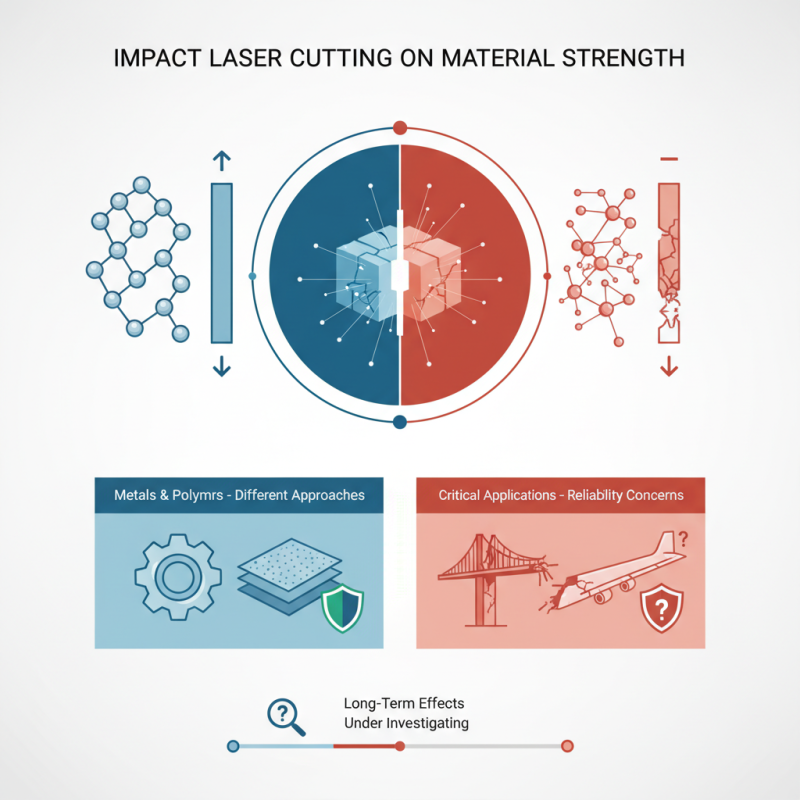
How Does Laser Cutting Impact the Strength of Materials?

Understanding Laser Cutting Technology and Its Mechanism

Laser cutting technology has transformed how we approach material processing. It employs focused beams of light to cut through various materials with precision. This method uses high-energy laser beams to create narrow cuts. The process is highly efficient and minimizes material waste. However, understanding its impact on material strength is crucial for engineers and designers.

When a laser cuts through materials, heat is generated, affecting their structural integrity. Some materials may harden at the edges due to rapid cooling, while others might experience changes in their overall strength. It's a complex interplay of factors, including the material type, thickness, and cutting settings.

Tips: Regularly test materials after laser cutting to assess any strength alterations. Consider using a lower power setting if material distortion occurs. Accurate control of laser parameters can maintain material integrity. Balancing speed and power is essential in achieving the best results.

The Relationship Between Laser Cutting and Material Properties

Laser cutting offers precision and efficiency, but it also influences the material properties significantly. The heat generated during the cutting process can alter the microstructure of metals. Research shows that temperatures can exceed 2000°C during cutting. This creates a heat-affected zone (HAZ) that can compromise material strength. A report from the International Journal of Advanced Manufacturing Technology reveals that up to 40% of the material's yield strength can be affected in some steels.

When cutting materials like aluminum or titanium, the effects can vary. For instance, aluminum may see a reduction in hardness due to thermal exposure. However, titanium often retains its strength, except in cases where prolonged exposure occurs. In a study published by the American Welding Society, it was noted that almost 30% of the tensile strength could decrease under certain laser cutting parameters. These findings highlight the need for careful control over cutting processes to maintain desired material properties.

Moreover, the edge quality plays a role in the overall performance of the material post-cutting. Rough edges may initiate cracks and fatigue earlier. Correctly setting parameters like cutting speed and power can help achieve smoother edges, important for maintaining structural integrity. An article from the Journal of Materials Processing Technology emphasizes that optimizing the laser settings is crucial to mitigate potential losses in strength. Each material type may respond differently, urging engineers to reflect on their approach.

Impact of Laser Cutting on Mechanical Strength of Various Materials

Laser cutting technology has significantly altered how we approach material processing. The precision of laser cutting allows for clean, intricate cuts, which can enhance the aesthetic appeal of products. However, the impact on the mechanical strength of materials is more complex. High-energy lasers can cause localized heating, leading to microstructural changes. These changes might either strengthen or weaken the material, depending on various factors like the material type and thickness.

Metals such as steel can experience altered hardness due to thermal stresses. The edge quality often affects fatigue resistance. Conversely, certain plastics may become more brittle after laser treatment. While precision is a clear advantage, the potential for reduced strength in specific conditions requires careful evaluation. Designers must weigh the benefits of clean cuts against the possible need for post-processing treatments to restore strength. This places a unique responsibility on engineers to optimize designs for both aesthetics and performance, considering the nuances of laser cutting impacts.

Comparative Analysis: Laser Cutting vs. Traditional Cutting Methods

Laser cutting has revolutionized the manufacturing sector. Its precision is noteworthy compared to traditional cutting methods like plasma or mechanical cutting. A study published in the *Journal of Manufacturing Science and Engineering* reveals that laser cutting can achieve tolerances as tight as ±0.1 mm, significantly outperforming traditional alternatives.

Traditional cutting methods often induce stress and heat, affecting material integrity. The heat-affected zone (HAZ) can compromise the strength of metals. In contrast, laser cutting minimizes HAZ, preserving material properties. Research indicates that laser cutting can maintain up to 90% of the original tensile strength in metals, while traditional methods may reduce this by 30% to 50%. Such data underlines the advantages of laser cutting in terms of strength retention.

However, it is essential to note that laser cutting is not without its challenges. Materials like reflective metals may pose difficulties. Moreover, the cost of laser cutting technology can be prohibitive for small manufacturers. Quality control remains a concern, as inconsistencies can arise from varying thicknesses. Understanding these aspects is crucial for those considering a shift to laser cutting.

Impact of Laser Cutting vs. Traditional Cutting Methods on Material Strength

Applications of Laser-Cut Materials in Engineering and Manufacturing

Laser cutting has transformed various sectors in engineering and manufacturing. The precision offered by laser technology allows for intricate designs and tight tolerances. This makes it ideal for various applications, including aerospace, automotive, and medical device manufacturing. By employing laser cutting, manufacturers can achieve smooth edges and fine details that traditional methods struggle to replicate.

In the aerospace sector, laser-cut materials play a vital role. Components must endure extreme conditions. The strength of materials is essential for safety and performance. However, despite the advantages, there are concerns. The heat from the laser can alter the microstructure of certain materials. This can sometimes lead to unexpected weaknesses in critical components.

Moreover, in the automotive industry, laser-cut parts are increasingly common. They contribute to lightweight designs while maintaining structural integrity. Manufacturers are still learning about the long-term impacts of laser cutting on various materials. Balancing efficiency with quality continues to be a challenge. The potential for inconsistencies prompts engineers to re-evaluate their processes routinely.

How Does Laser Cutting Impact the Strength of Materials? - Applications of Laser-Cut Materials in Engineering and Manufacturing

Material Type Thickness (mm) Cutting Speed (mm/s) Strength Reduction (%) Common Applications
Mild Steel 5 300 10 Automotive components
Stainless Steel 3 250 8 Medical devices
Aluminum 4 500 5 Aerospace parts
Acrylic 10 600 3 Signage and displays
Wood 12 400 6 Furniture and decor

FAQS

: What is laser cutting technology?

: Laser cutting technology uses focused beams of light to cut materials precisely. It minimizes waste and enhances efficiency.

How does laser cutting affect material strength?

The heat generated can alter the structural integrity of materials. Hardening and softening may occur at the edges.

What is the heat-affected zone (HAZ)?

The HAZ is an area where the heat from cutting changes material properties, potentially reducing yield strength significantly.

Are all materials affected equally by laser cutting?

No, effects vary by material. For example, aluminum can lose hardness, whereas titanium often retains strength.

How can engineers control the impact of laser cutting?

Engineers should adjust cutting speed and power. Regular material tests can help assess strength changes after cutting.

What are the applications of laser-cut materials?

Laser-cut materials are vital in aerospace, automotive, and medical industries, offering precision and intricate designs.

What concerns exist regarding laser-cut components?

The potential for unexpected weaknesses in critical components from altered microstructures is a significant concern for manufacturers.

How can edge quality affect laser-cut materials?

Rough edges may cause cracks and fatigue, which can lead to structural issues earlier than anticipated.

Why is careful parameter setting important?

Properly optimizing laser settings helps maintain material integrity and performance, mitigating strength loss during cutting.

What ongoing challenges do manufacturers face?

Balancing speed and quality while ensuring the long-term reliability of laser-cut parts is a continuing struggle.

Conclusion

The article "How Does Laser Cutting Impact the Strength of Materials?" explores the intricacies of laser cutting technology and its mechanisms. It delves into the relationship between laser cutting and the inherent properties of various materials, highlighting how does laser cutting affect material strength through thermal effects and alteration of microstructures. The discussion extends to a comparative analysis of laser cutting versus traditional cutting methods, emphasizing the advantages and limitations of each technique in terms of material integrity.

Furthermore, the study examines the impact of laser cutting on the mechanical strength of diverse materials, including metals and polymers, showcasing its applications in engineering and manufacturing. By understanding the nuances of laser cutting, industries can better utilize this technology to enhance material performance while ensuring precision and efficiency in their processes.

Madeline

Madeline

Madeline is a dedicated marketing professional with a wealth of expertise in our company's core offerings. With a keen understanding of the industry, she brings a unique perspective to her role, consistently delivering high-quality content that highlights the superior aspects of our products. As......