Can Laser Cutting Replace Traditional Die Cutting in 2026?

Time:2026-06-04 Author:Madeline
0%

In recent years, the question "can laser cutting replace traditional die cutting" has gained traction in manufacturing discussions. Reports indicate that the laser cutting market is projected to reach $5.8 billion by 2026, driven by innovations and increased efficiency. Traditional die cutting, while reliable, involves longer setup times and higher material waste. Companies are seeking solutions that enhance productivity and reduce costs.

Laser cutting technology offers precision and flexibility that traditional methods sometimes lack. It can cut through various materials with intricate designs, ideal for industries like automotive and aerospace. However, it is crucial to consider the initial investment costs of laser systems. Not every company may be ready to embrace this change as they assess their unique production needs.

While laser cutting provides significant advantages, it is not a catch-all solution. Some applications still benefit from die cutting methods, especially for high-volume runs. Thoughtful evaluation is needed to understand when one technology outweighs the other. As 2026 approaches, industries must explore whether laser cutting truly complements or replaces traditional die cutting processes.
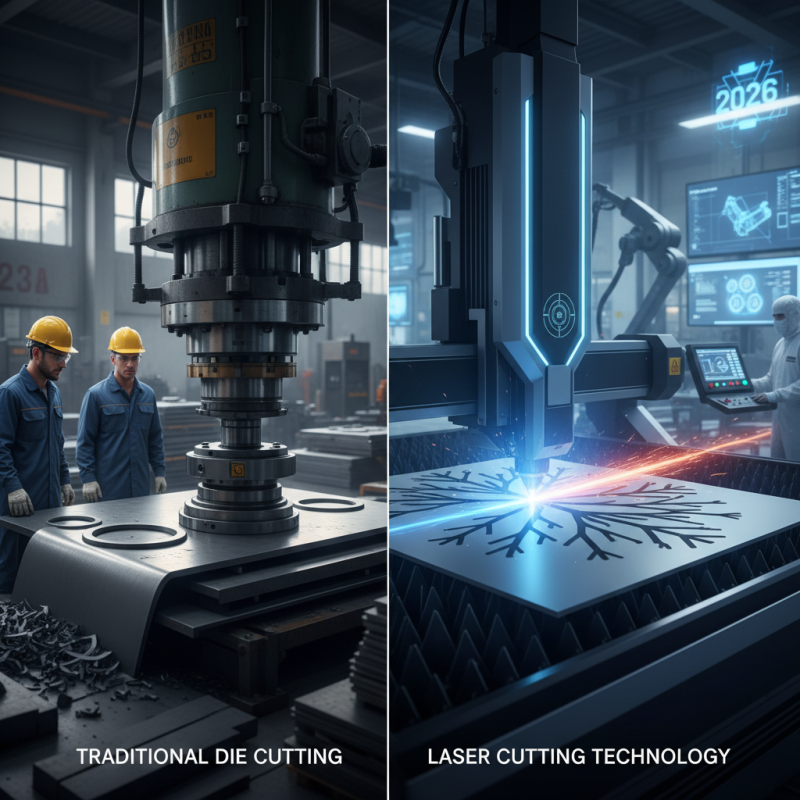
Can Laser Cutting Replace Traditional Die Cutting in 2026?

Overview of Traditional Die Cutting and Its Applications

Traditional die cutting has long been a staple in various industries, including packaging, textiles, and automotive. This method employs sharp dies to cut materials into precise shapes. According to a 2023 industry report, the die cutting market is projected to reach $10 billion by 2026. This figure reflects the consistent demand for high-quality, custom shapes in manufacturing.

Applications of die cutting range widely. In packaging, it ensures that boxes and labels fit perfectly. In textiles, companies rely on it for cutting patterns. A survey indicated that nearly 70% of manufacturers cite precision as a key benefit of traditional die cutting. However, this method is not without challenges. It can be time-consuming, and the cost of die maintenance can add up. Additionally, customization options are often limited by the manufacturing process.

As the industry evolves, there are ongoing discussions about the viability of laser cutting as a replacement. Laser cutting offers benefits like increased flexibility and reduced waste. Yet, issues such as slower cutting speeds and higher initial costs could hinder widespread adoption. The debate between these methods will likely shape the future of cutting technologies in the coming years.

Can Laser Cutting Replace Traditional Die Cutting in 2026? - Overview of Traditional Die Cutting and Its Applications

Aspect Traditional Die Cutting Laser Cutting
Setup Time Higher; requires die creation Lower; no die needed
Material Flexibility Limited to specific materials Broad range of materials
Production Speed Fast for high volumes Faster for short runs
Cost Efficiency Cost-effective for large batches Higher initial cost; better for small quantities
Precision Good but may vary Very high precision
Waste Generation Higher waste due to die shaping Lower waste; more accurate cutting
Applications Packaging, automotive parts Aerospace, arts and crafts
Lead Time Longer due to die setup Shorter, quicker turnarounds

Advancements in Laser Cutting Technology and Capabilities

Advancements in laser cutting technology have significantly transformed manufacturing processes. In recent years, laser cutting has evolved, boasting improved precision and enhanced speed. According to a report by MarketsandMarkets, the laser cutting market is expected to grow from $4.41 billion in 2021 to $7.13 billion by 2026. This growth indicates a shift in industry preferences towards more efficient solutions.

The capabilities of modern lasers allow for intricate designs that traditional die cutting struggles to achieve. Laser systems can cut various materials, including metals, plastics, and textiles, with impeccable accuracy. A study by Research and Markets highlighted that laser cutting reduces material waste by up to 30%. This reduction not only lowers costs but also reflects a growing emphasis on sustainability in manufacturing.

However, challenges remain. The initial investment in laser technology can be daunting for smaller businesses. Some manufacturers may also find the learning curve steep. While laser cutting presents numerous advantages, the transitional phase from traditional methods could reveal unforeseen complications. The industry must address these gaps to fully embrace the potential of laser cutting.

Comparison of Laser Cutting and Traditional Die Cutting Efficiency (2023)

Comparative Analysis: Laser Cutting vs. Traditional Die Cutting

In the rapidly evolving landscape of manufacturing, laser cutting and traditional die cutting stand out as two prominent technologies. Laser cutting uses a focused beam of light to precisely cut materials. It offers high accuracy and versatility. However, traditional die cutting relies on physical dies and is often seen as the more established method.

When choosing between the two, consider production volume. Laser cutting is more efficient for smaller runs or custom designs. In contrast, die cutting excels in mass production with its faster setup for high quantities. Yet, die cutting can lead to material waste due to its reliance on large sheets and fixed shapes.

Tips: Always assess the specific needs of your project. If flexibility and detail are crucial, laser cutting may be the better option. For large scale production, die cuts could be more cost-effective despite potential material waste. Balancing quality and quantity is key. Remember, it’s essential to stay informed about technology advancements in both methods. Each option has its unique advantages and limitations, so understanding them can lead to a more informed decision.

Factors Influencing the Shift Towards Laser Cutting in 2026

The shift towards laser cutting technology in 2026 is influenced by several key factors. First, precision is paramount. Laser cutting offers high accuracy, reducing waste and improving product quality. Traditional die cutting often struggles with intricate designs, leading to errors and delays. In industries like automotive and aerospace, this precision can be a game-changer.

Cost is another critical element. Laser cutting may have higher initial setup costs, but its efficiency can lead to lower overall expenses. Shorter production times translate into quicker market entry. However, some manufacturers might hesitate due to the investment required. This hesitation could be a reflection of a conservative industry mindset, which tends to favor established methods.

Additionally, versatility plays a crucial role. Laser cutting can handle a variety of materials, from metals to plastics. This flexibility allows manufacturers to adapt to changing market demands. Still, the need for skilled operators cannot be overlooked. Companies may face challenges in finding trained personnel, limiting the technology’s implementation. Encouraging ongoing training will be essential as the industry evolves.

Potential Challenges and Limitations of Laser Cutting Adoption

Laser cutting technology presents exciting opportunities for various industries. However, its widespread adoption comes with notable challenges. The initial cost of laser cutting machines can be high. Many small businesses may struggle to find the budget. This financial barrier can hinder progress in integrating this technology.

Moreover, laser cutting requires skilled operators. Employees need adequate training to manage the machines effectively. Without proper expertise, the risk of errors increases. This could lead to wasted materials and time, further complicating the transition. Additionally, certain materials pose difficulties for laser cutting. For instance, reflective metals can cause issues that traditional die cutting can handle more effectively.

Another concern is production speed. While laser cutting can be precise, it may not always match the rapid output of die cutting in high-volume settings. Businesses must weigh the benefits against these limitations. The balance between precision and efficiency is delicate. As industries evolve, understanding these challenges is crucial for a smooth transition to laser cutting.

FAQS

: What is traditional die cutting?

: Traditional die cutting uses sharp dies to cut materials into precise shapes. It's common in many industries.

What industries utilize die cutting?

Die cutting is vital in packaging, textiles, and automotive sectors. Each industry benefits from precise cutting capabilities.

What is the projected market size for die cutting by 2026?

The die cutting market is projected to reach $10 billion by 2026. This indicates steady growth and demand.

What are the main benefits of traditional die cutting?

Precision is a key benefit. About 70% of manufacturers value accuracy in their cutting processes significantly.

What challenges come with traditional die cutting?

Traditional die cutting can be time-consuming, and maintenance costs may surge. Customization options are often limited as well.

Why is laser cutting being considered a better alternative?

Laser cutting offers increased flexibility and precision, which can improve product quality. It reduces waste during the cutting process.

What are the initial obstacles to adopting laser cutting?

Higher setup costs and the need for trained operators may hinder laser cutting's adoption. These factors require careful consideration.

How does laser cutting affect production times?

Laser cutting can shorten production times, leading to quicker market entry. This efficiency is a significant attracting factor.

What materials can laser cutting handle?

Laser cutting is versatile, able to process metals, plastics, and more. This flexibility meets diverse market demands.

Why is skilled personnel important for laser cutting?

Skilled operators are crucial for efficient implementation. Finding trained personnel remains a challenge for many companies.

Conclusion

The article explores the question, "can laser cutting replace traditional die cutting" by examining the strengths and limitations of both methods. It begins with an overview of traditional die cutting, detailing its widespread applications and long-standing presence in manufacturing. The discussion then shifts to the advancements in laser cutting technology, highlighting its increased precision, flexibility, and efficiency in various industries.

A comparative analysis follows, weighing the benefits of laser cutting against traditional die cutting, particularly in terms of setup time and material waste. Factors influencing the potential shift towards laser cutting by 2026 are also considered, such as cost-effectiveness and evolving industry needs. However, the article concludes by addressing the challenges and limitations associated with adopting laser cutting, suggesting that while it may not completely replace traditional die cutting, it will certainly complement and reshape the landscape of cutting technologies in the near future.

Madeline

Madeline

Madeline is a dedicated marketing professional with a wealth of expertise in our company's core offerings. With a keen understanding of the industry, she brings a unique perspective to her role, consistently delivering high-quality content that highlights the superior aspects of our products. As......