Laser Cutting vs Stamping What Are the Key Advantages?

Time:2026-05-03 Author:Ethan
0%

In the world of metal fabrication, choosing the right method is crucial. Laser cutting and stamping are two prevalent techniques, each with distinct benefits. A common inquiry is, *what are the advantages of laser cutting over stamping?* This comparison sheds light on performance, precision, and costs.

Laser cutting offers superior accuracy, making it ideal for intricate designs. It creates clean edges and minimizes material waste, which is vital for both efficiency and sustainability. Businesses increasingly focus on cost-effectiveness. While initial investments may be high, laser cutting's longevity often offsets expenses.

Stamping, although reliable for high-volume production, may fall short in flexibility. It struggles with complex shapes and requires additional tools, leading to increased lead times. The choice depends on specific project needs. While both methods have merit, laser cutting’s advanced capabilities warrant serious consideration in today’s dynamic manufacturing landscape. Reflecting on these insights can guide manufacturers to make informed decisions.
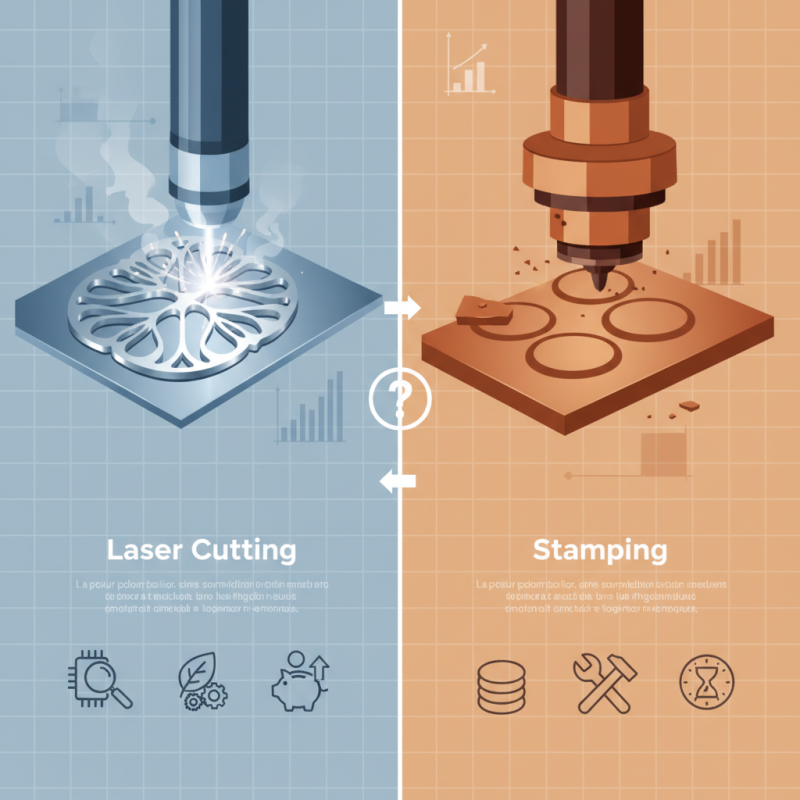
Laser Cutting vs Stamping What Are the Key Advantages?

Key Advantages of Laser Cutting: Precision and Flexibility in Fabrication

Laser cutting has transformed fabrication with its exceptional precision. This technology allows for intricate designs that traditional methods often struggle to achieve. The laser cuts through materials with a high degree of accuracy, maintaining tight tolerances. This ensures that even the most detailed components can be produced without the need for extensive rework.

Flexibility is another cornerstone of laser cutting. It accommodates a wide range of materials, from metals to plastics and beyond. Designers can easily adjust specifications, making it ideal for custom projects. The setup time is minimal, which can lead to shorter production runs and reduced waste. However, the learning curve for operators can be steep. Proper training is essential to unlock the full potential of this technology.

While laser cutting excels in many areas, it is not without challenges. The equipment can be expensive, and operational costs may rise with increased energy consumption. Also, not all materials are suitable for laser cutting. Reflection from certain metals can pose risks to the equipment. These factors warrant careful consideration when choosing laser cutting for your project.

Stamping Techniques: Speed and Cost-Effectiveness in Production

Stamping has become a popular choice for many manufacturers. Its speed is one of the most significant advantages. Stamping machines can produce hundreds of parts per minute. This high output is essential for large-scale production. In industries like automotive and electronics, rapid turnaround times are crucial. The ability to meet high demand efficiently makes stamping a go-to method.

Cost-effectiveness is another benefit of stamping. Once the initial tooling is completed, the cost per part decreases. This reduction in costs helps manufacturers stay competitive in the market. While the upfront investment can be high, the long-term savings pay off. However, the reliance on tooling can present challenges. If designs change, new dies may be necessary, leading to additional costs.

Despite its advantages, stamping may not always be the best choice. Material limitations and design complexities can hinder outcomes. Certain detailed shapes are difficult to achieve with stamping alone. Manufacturers should carefully consider their specific needs. A balanced approach between stamping and alternative methods could yield optimal results. In many cases, a combination of techniques is worth exploring for efficiency and quality.

Laser Cutting vs Stamping: Key Advantages

Material Compatibility: How Laser Cutting and Stamping Compare

When comparing laser cutting and stamping, material compatibility plays a crucial role. Laser cutting excels with various materials, including metals, plastics, and wood. Its precision makes it suitable for intricate designs. The technology allows for fine details, which is vital in applications like aerospace or automotive parts. This capability can significantly reduce the need for additional machining processes.

On the other hand, stamping processes are optimal for specific materials, primarily metals. Stamping is efficient for high-volume production, especially for simpler shapes. However, it struggles with intricate designs. There can be limitations in flexibility when adapting to different materials.

Each method has strengths and weaknesses. Laser cutting offers versatility and detailed precision but can be slower for large runs. Stamping is faster and cheaper for mass production but lacks the adaptability of laser cutting. Choosing between them requires careful consideration of the specific project needs.

Impact on Product Quality: Surface Finish and Tolerances in Manufacturing

Laser cutting and stamping are two popular methods in manufacturing. Each method presents unique impacts on product quality, particularly concerning surface finish and tolerances. Laser cutting offers precise control over material thickness. According to industry reports, laser cutting can achieve tolerances as tight as ±0.1 mm. This precision enhances the surface finish, contributing to aesthetic appeal and functionality.

In contrast, stamping can struggle with tight tolerances. Studies indicate that standard stamping processes can reach tolerances of around ±0.5 mm. The surface finish from stamping often requires additional processing steps to meet design specifications. While stamping is efficient for high-volume production, the quality can vary, leading to concerns about consistency. For applications where fine details matter, the choice between laser cutting and stamping becomes critical.

Manufacturers must evaluate the end-use of parts. If product aesthetics and tight tolerances are pivotal, laser cutting is often the preferred choice. Yet, there are considerations regarding operational costs and production speed. Both methods have their limitations and benefits, highlighting the need for careful selection based on project requirements. Understanding these nuances can significantly impact overall product quality.

Industry Applications: Choosing Between Laser Cutting and Stamping

When considering industry applications, laser cutting and stamping each bring unique benefits. Laser cutting boasts precision and flexibility. It can easily handle intricate designs and various materials. This capability is essential in industries like aerospace, where detailed components are crucial. The ability to adjust settings for different thicknesses enhances its versatility.

On the other hand, stamping excels in high-volume production. It is faster and often more cost-effective for mass manufacturing. Industries like automotive benefit greatly from stamping. This method allows for quick replication of parts, maintaining uniformity across batches. However, stamping might struggle with intricate designs. Designing tools for complex shapes can elevate costs and production time.

Both methods require careful consideration. While laser cutting offers customization, it may not always be the most efficient for large quantities. Stamping, while efficient, may lack the detail required for certain applications. Striking the right balance between these techniques is vital for optimal production outcomes. Each method has its own strengths and challenges, underscoring the need for thoughtful decision-making in manufacturing processes.

FAQS

: What are the main advantages of stamping in manufacturing?

: Stamping offers high-speed production, generating hundreds of parts each minute. It's cost-effective after initial tooling.

How does stamping impact production costs?

While initial investment is high, the cost per part decreases over time, enhancing competitiveness in the market.

Can stamping handle complex designs effectively?

No, stamping may face difficulties with intricate shapes, which can impact design outcomes and require additional costs.

What are the tolerances achieved through stamping?

Standard stamping processes typically reach tolerances around ±0.5 mm, which may not be tight enough for precise applications.

How does laser cutting compare to stamping regarding surface finish?

Laser cutting achieves tighter tolerances of ±0.1 mm, enhancing the surface finish, while stamping may need extra processing.

In what industries is stamping most beneficial?

Stamping is particularly advantageous in high-volume production sectors like automotive, where uniformity is crucial.

What factors should manufacturers consider when choosing between stamping and laser cutting?

Consider end-use requirements, desired aesthetics, tolerances, speed, and operational costs to make informed decisions.

Is a combination of techniques advisable in manufacturing?

Yes, a combination of stamping and laser cutting might yield better efficiency and quality based on project specifics.

Are there any potential drawbacks of relying solely on stamping?

Yes, reliance on tooling can lead to extra costs if designs change, and quality may vary between productions.

What is a common challenge with stamping regarding consistency?

Stamping can result in varied quality, prompting additional processing to meet design specifications for certain applications.

Conclusion

Laser cutting and stamping are two prominent fabrication methods, each with distinct advantages. One of the key advantages of laser cutting over stamping is its precision and flexibility, allowing for intricate designs and the ability to work with various materials. Laser cutting is particularly effective for complex shapes and detailed patterns without compromising quality, offering superior surface finishes and tighter tolerances compared to stamping.

On the other hand, stamping techniques are known for their speed and cost-effectiveness in mass production, making them an attractive choice for larger volumes. When considering material compatibility, both methods have their strengths, with laser cutting being versatile but potentially slower for high-volume tasks. Ultimately, the choice between laser cutting and stamping depends on the specific industry applications and the desired outcomes, weighing factors like production speed, cost, and product quality.

Ethan

Ethan

Ethan is a seasoned marketing professional with a deep expertise in our company's innovative product line. With a passion for sharing knowledge and insights, he takes the lead in regularly updating our corporate blog, where he explores industry trends, product features, and effective marketing......